A £10,000 Golden Hello is available for Air Traffic and Weapons Controllers, subject to the eligibility criteria outlined on the link below.
AIR TRAFFIC & WEAPONS CONTROLLER

CURRENTLY RECRUITING
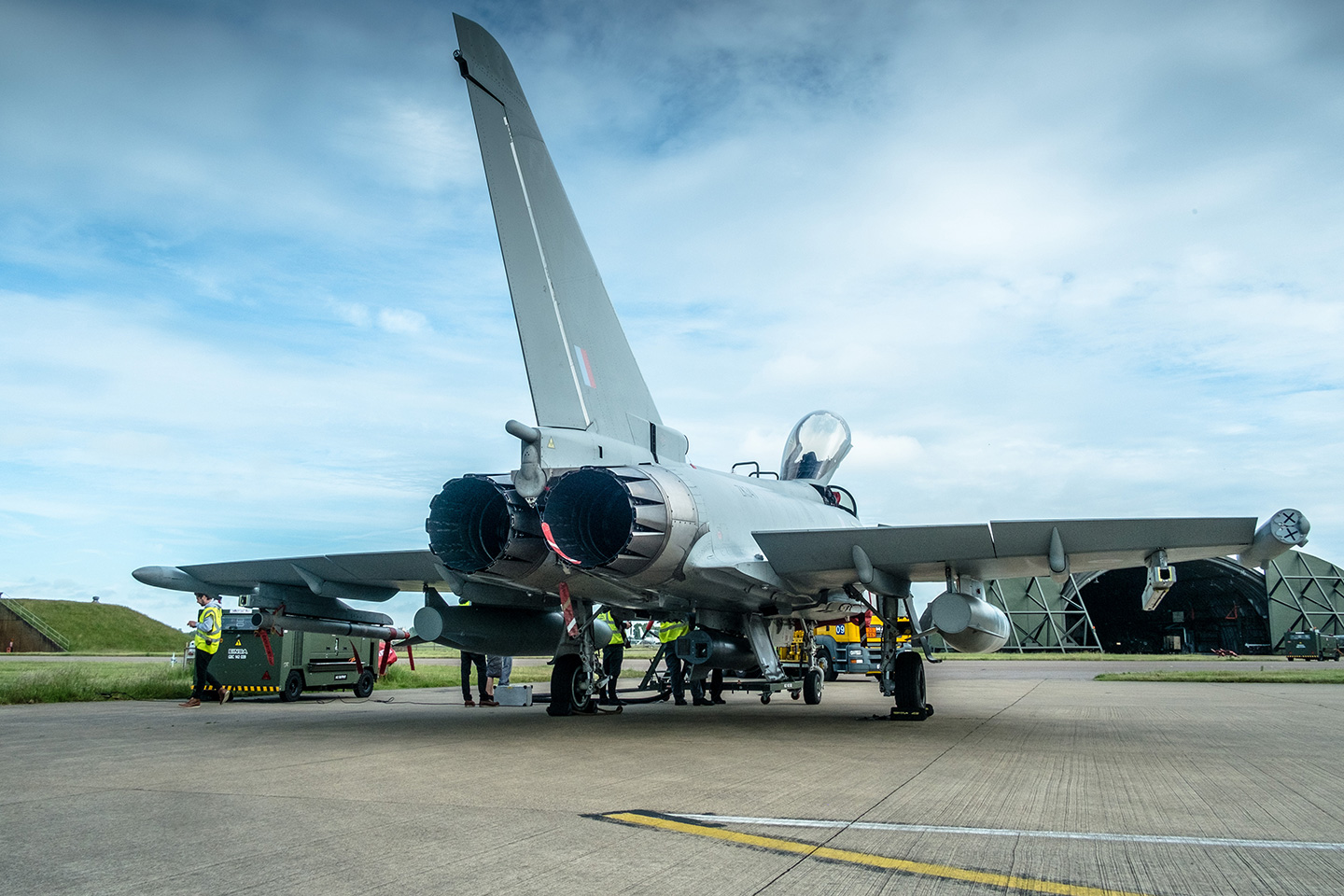
Aircraft
Analysis & maths
Gaming & computers
INITIAL ANNUAL PAY
£27,200+
+ Benefits
Salary after successful completion of training – usually around 14 months
£51,000
+ Benefits
PAY IN FIRST PRODUCTIVE YEAR
£61,000
Once qualified and including £10,000 Golden Hello
A £10,000 Golden Hello is available for Air Traffic and Weapons Controllers, subject to the eligibility criteria outlined here.
RAF Air Traffic and Weapons Controllers keep our airspace safe by co-ordinating military aircraft in direct support of air defence in the UK and, where required, overseas. Split into two distinct roles: Air Traffic Controllers are responsible for the safe flight of all military aircraft, operating in UK airspace. As Weapons Controllers you could guide interceptor aircraft to hostile targets in support of UK air defence.
This isn’t a 9-to-5 desk job; it is a high-paced, elite career offering advanced professional training, rapid career progression, and global travel.
Don't limit yourself. You can apply for more than one position and we can help you find the right role.
You can view and manage favourites here.
Already applied? See what the next steps in the application process are below.
GOLDEN HELLO OF £10,000

What will you do?
You are at the heart of the RAF's flying output, responsible for directing and supporting operations both in the UK and around the world. You will control military aircraft whilst leading and managing a team to deliver the mission.
Subject to role allocation, you will have the opportunity to gain three Level 5 qualifications:
a Level 5 ILM Award in Leadership and Management
a Level 5 Air Traffic Controller Apprenticeship - recognised in civilian air traffic control
OU Airspace Management Foundation Degree, exclusive to our Air Traffic Controllers
Air Traffic and Weapons Controllers have varied overseas deployment opportunities and a permanent Air Traffic Control presence at RAF Akrotiri, Cyprus. You could find yourself controlling aircraft across the world; from the Falkland Islands, Northern and Eastern Europe, the USA or anywhere the mission needs you.

Requirements at a glance
- You will need GCSEs at a minimum of Grade 4 in English Language and Mathematics (or acceptable equivalents, including Functional Skills)
or
Scottish Certificate of Education (SCE) Standard Grades at a minimum of Grade 2, in English Language and Mathematics
or
Scottish National Equivalent (SNE) grades at Grade 5, in English Language and Mathematics - Be aged 17 and-a-half years old – 38 years old (Must attest before 39th birthday)
- You will need to meet specific Nationality and Residency criteria. Please see full details in the Entry Requirements section below
- Commit minimum 3 years post Phase Two Training
- Meet the health and fitness criteria
- Pass a Fitness test - Detail below

ENTRY REQUIREMENTS
You must be aged 17.5 – 38 years old
Applicants must also read all of the sections below and make sure they meet all entry requirements before submitting an application.
EDUCATION REQUIREMENTS

You will need GCSEs at a minimum of Grade 4 in English Language and Mathematics (or acceptable equivalents, including Functional Skills)
or
Scottish Certificate of Education (SCE) Standard Grades at a minimum of Grade 2, in English Language and Mathematics
or
Scottish National Equivalent (SNE) grades at Grade 5, in English Language and Mathematics
If your qualifications are not listed, or you do not have any qualifications, please Contact Us to learn more about how you can join the Royal Air Force.
NATIONALITY & RESIDENCY
NATIONALITY
You must be a citizen of the United Kingdom or holder of dual UK/other nationality.
RESIDENCY
Whether or not you were born in the United Kingdom, you should have resided there for the 5 years immediately preceding your application, but candidates with a minimum of 3 years may be considered.
If you have resided abroad for a period due to work or study, you may still be eligible on a case by case basis. This will be established during the selection process.
The Nationality and Residency requirements are the foundation of obtaining the necessary security clearance. The nationalities of your spouse or partner, and parents, are also taken into account among other factors.
There will be further pre-employment checks and you will be expected to achieve the security clearance of Security Check (SC).
Employment restrictions may be imposed in the future if you are unable to achieve an increased security clearance requirement for selected placements.
Security Vetting and Nationality Considerations
RAF security policies are subject to ongoing review, which may impact the eligibility of individuals with dual nationality or direct connections to certain countries to obtain the minimum required level of security vetting. Security vetting is a mandatory requirement for all RAF personnel.
Applicants are welcome to proceed with their application to join the RAF; however, it is important to understand that permanent employment is contingent upon successfully obtaining the appropriate level of security vetting for the chosen role.
If it is determined that an applicant’s nationality or connections may prevent the granting of the required clearance, this could result in the rejection of the application. Additionally, restrictions may apply to the roles available to individuals based on nationality or dual nationality concerns, as outlined by UK government policy.
FITNESS REQUIREMENTS
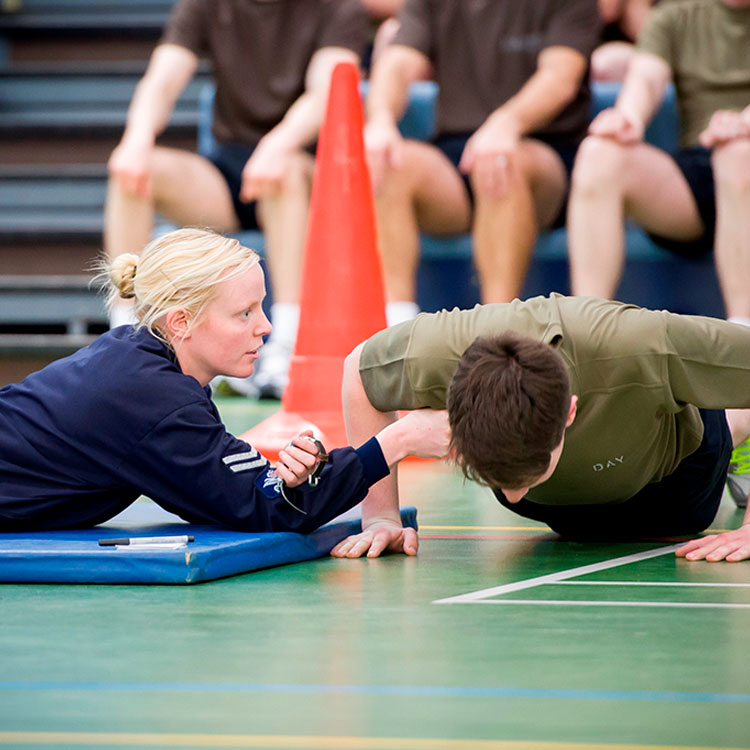
You must be physically fit to complete both initial and specialist training, and to do your role effectively. Every candidate's fitness levels are tested as part of the application process.
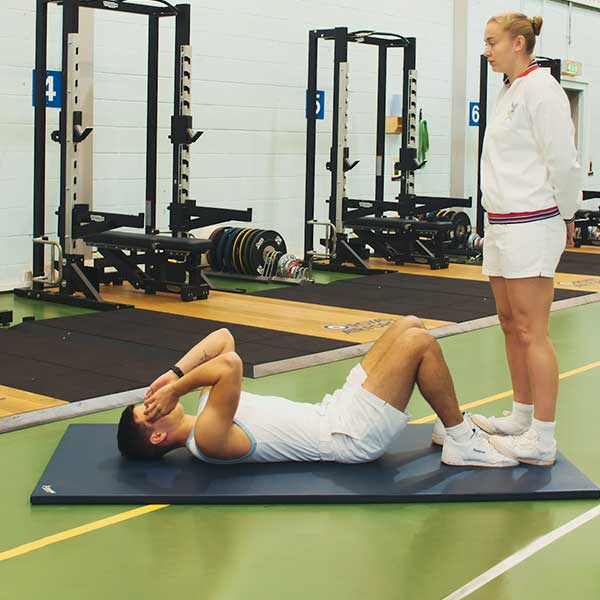
The first of these is the Pre-Joining Fitness Test (PJFT) which takes place at a fitness centre local to you. This consists of a 2.4km (1.5m) run on a treadmill (set to zero incline)
How fit you need to be to pass this test varies on age and gender. The PJFT requirements are listed on the charts below (Male and Female).
| MEN | |
| AGE | 2.4 Km Run |
| (Mins) | |
| 15-16 | 13.52 |
| 17-29 | 13.20 |
| 30-34 | 13.49 |
| 35-39 | 14.14 |
| 40-44 | 14.46 |
| 45-49 | 15.17 |
| 50-54 | 15.53 |
| WOMEN | |
| AGE | 2.4 Km Run |
| (Mins) | |
| 15-16 | 16.22 |
| 17-29 | 15.48 |
| 30-34 | 16.14 |
| 35-39 | 16.44 |
| 40-44 | 17.22 |
| 45-49 | 17.57 |
| 50-54 | 18.34 |
See here for more information about a training plan
A second fitness test will take place at RAF Cranwell as part of your familiarisation visit. This includes the Multi-Stage Fitness Test (MSFT or Bleep test). Standards to achieve will be given during the visit.
HEALTH REQUIREMENTS
Candidates joining the RAF must be medically fully fit, both physically and psychologically, to meet the challenges of military service, during which they will be expected to deploy, potentially at short notice, to locations world-wide that are remote from established medical care.
Certain medical conditions could preclude entry to the RAF. Further details can be found in this document.
Body Mass Index (BMI) Information
Why is BMI important?
One of the most common medical causes of delay to candidate’s applications, is falling outside the selection BMI limits. Candidates with a BMI outside the selection limitations are statistically at increased risk of injury during basic training and long-term ill health.
What is BMI?
BMI is calculated using your height and weight. The National Institute for Health and Care Excellence (NICE) classify a healthy BMI as being between 18.5 and 24.9. Some individuals have an elevated BMI due to a high muscle mass. To accommodate individuals with an elevated BMI (up to a maximum of 32) caused by high muscle mass, waist circumference measurements are used.
How to measure your waist circumference
Breathe normally and the waist measurement is to be taken at the end of a normal breath out. Position the tape measure midway between the bottom of the ribcage and the top of the pelvis. The tape should be snug but not compress the skin. If there is difficulty finding the bony landmarks, place the tape at the level of the tummy button.
Calculating your BMI
BMI Limitations for RAF Selection
| Age | BMI minimum | BMI maximum | Male maximum BMI (with additional assessment) | Female maximum BMI (with additional assessment) |
| 18 or over | 18 | 30 | 32 (waist circumference less than 94cm) | 32 (waist circumference less than 80cm) |
| 16 to 17 | 17 | 27 | 27 | 27 |
Eyesight
Eyesight standards vary for different roles. Wearing glasses or contact lenses may be allowed.
Health Criteria
If you are unsure about any health criteria, please continue your application and your eligibility will be assessed at the medical examination stage.
During your application, the Medical Risk Assessment that all candidates undergo is there to make sure that you are healthy enough for the intense training required by the RAF. Your application will be rejected if you fail to meet the minimum acceptable medical standard for entry. Your medical history is confidential and is not disclosed to those not authorised to hold this information.
BACKGROUND CHECKS
YOU MUST:
- Declare any previous spent and unspent convictions
- Check if you qualify under the Rehabilitation of Offenders Act 1974 through this summary
- Achieve the minimum security clearance of Security Check (SC) for this role
DISQUALIFYING FACTORS
YOU CAN'T APPLY FOR THE RAF IF YOU:
- Have been or are a member of a group that stirs up racial hatred and violence
- Are waiting to appear in court, or have unspent convictions. You may also have to declare spent convictions for certain roles
- Misuse drugs, solvents and anabolic steroids. But each case is considered upon its own merits
- Have tattoos, brands or bead implants that are obscene or offensive.
Any permanent or temporary tattoos, whether ordinarily visible or not, must not be obscene or offensive (eg, racist, anti-religion or belief, crude, overtly sexist, homophobic, drug related or of an extreme political nature). Tattoos may be worn on the side and back of the neck but tattoos on the back of the neck must not extend above the natural hairline (scalp tattoos are not permitted). - Have body piercing which causes holes that do not close up
- Declare yourself to be an 'undischarged' bankrupt
Beard Policy:
Serving personnel can wear a smart, neatly-trimmed, full-set beard. The length of acceptable beards is between Grade 1 (2.5mm) and Grade 8 (25.5mm).
Usually, candidates are to be clean shaven when being fitted for their respirators in Phase One training, however other methods of creating a clean seal can be advised if this is not possible due to religious reasons.
If you don’t have any of the above, you might still be able to apply. For more information please contact us.
ROLE SPECIALISMS
You will specialise in either Air Traffic Control or Weapons Control. You’ll find out which role you’ve been assigned during your Leadership Training
This decision is based on three things:
• Your aptitude – measured through computer based aptitude tests (CBAT) taken during the application process
• Your preference – how you’d like to shape your future career
• Service need – where the RAF needs you the most
Together, these factors help ensure you’re placed in the role where you can perform best and make the greatest impact.
Air Traffic Control
As an Air Traffic Controller, you could be assigned to one of our many Air Traffic Control towers across the UK - from Scotland to Greater London, and from Wales to Norfolk, delivering both radar and tower control to our military aircraft.
You will make a direct contribution to UK air defence and global air operations wherever you are assigned. You could also be posted to 78 Squadron at Swanwick, where RAF controllers work inside the UK’s National Air Traffic Services centre.
Here, you would control high altitude military aircraft, conduct air-to-air refuelling, help guide aircraft during emergencies, and support the UK’s air defence by keeping track of military activity in the skies.
You could also be a part of the elite team of Tactical Air Traffic Controllers (TacATC), who deploy to operational locations around the world, working closely with UK special forces. You will be responsible for setting up and controlling aircraft in more challenging environments—even creating a working airfield where no runway previously existed.
Weapons Control
As a Weapons Controller, you will be based at RAF Boulmer, Northumberland, serving with 19 Squadron. From here, you’ll help protect UK and NATO airspace by providing round the clock air surveillance and tactical command and control.
You’ll support NATO Air Policing and the UK’s national air defence, playing a key role in the Quick Reaction Alert (QRA) force. This includes launching RAF fighter jets at short notice and guiding them to intercept and identify unknown or potentially hostile aircraft.
Using advanced radar and communication systems, you’ll direct fighter jets and supporting aircraft during live operations, ensuring they work together effectively in fast moving situations. While most of this work is carried out from the ground, some controllers may also operate airborne as part of the E 7 Wedgetail crew - one of the RAF’s most advanced aircraft, acting as a flying Command and Control centre.
Visit Air Traffic Control for a day
If you pass the Aptitude Test for this role, you will have the opportunity of attending a Realistic Job Preview (RJP) at RAF Shawbury. This will be a one day event where you will be able to take a look around Air Traffic Control, speak with instructors and gain more of an insight into the role.
This is not mandatory and your recruiter will be able to provide you with more information once your application has reached the correct stage.

Apprenticeships available
The RAF is one of the largest providers of diverse apprenticeships in the UK. We offer these apprenticeships for this role:
Level 5 Air Traffic Controller
The UK manages one of the busiest and most complex pieces of airspace in the world. A range of specialist air traffic controller roles contribute to the safe and efficient movement of aircraft with civil and military operations working collaboratively to maintain a fully integrated service to all users, 24 hours a day, every day of the year. This apprenticeship is the same as the one undertaken by civilian Air Traffic Controllers.
View full details

"I organise aircraft in the air and on the ground and give clearances for landing and taking off. Every day is different and brings new challenges. It is extremely rewarding knowing that I am part of a team responsible for the safe delivery of Air Power."
Sgt Sharman, Air Traffic and Weapons Controller

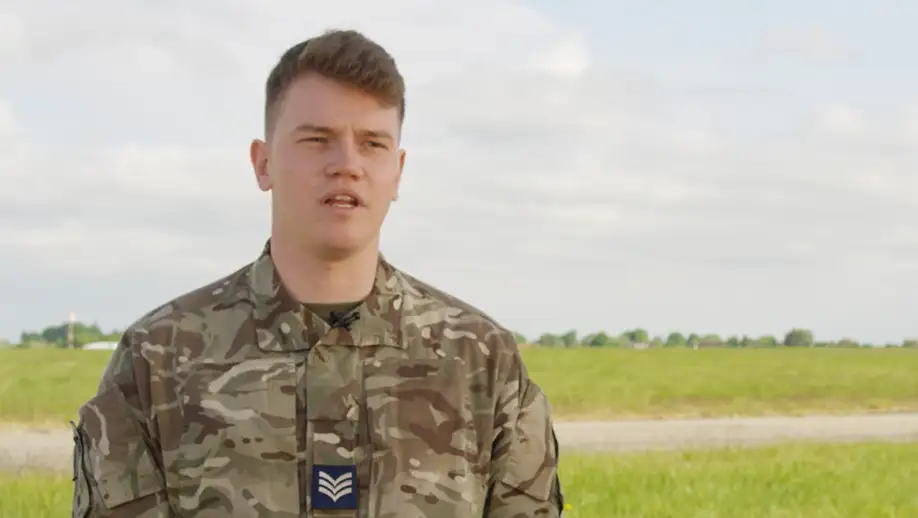
Becoming an Air Traffic & Weapons Controller
Discover more about Harry’s journey, his role responsibilities, and the travel opportunities he’s had since joining the force.
CAREER, TRAINING & EDUCATION
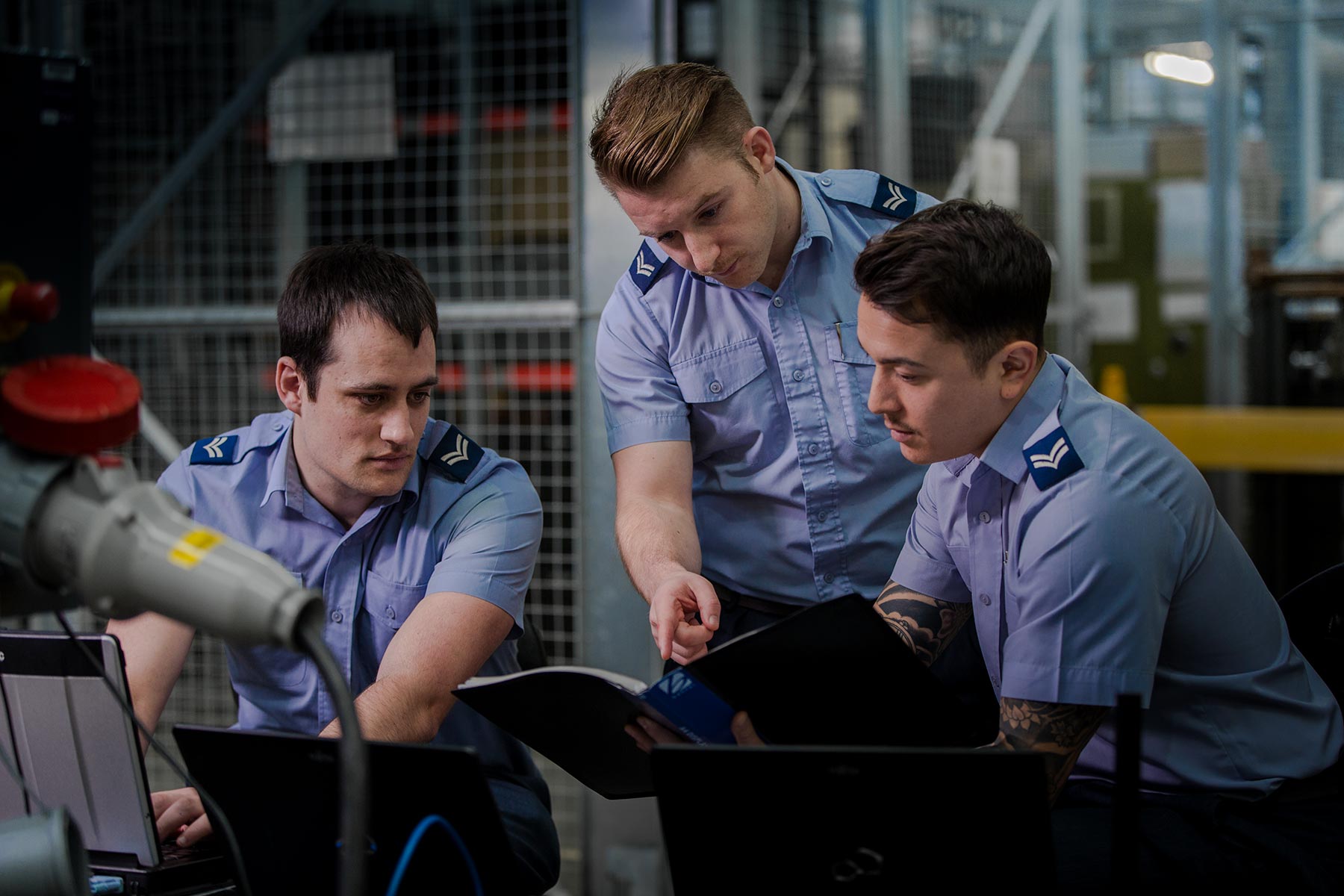
At any level or position your personal success is vital to make us succeed too. We are dedicated to your future, as it is essential to ours. You will receive basic and specialist training in your field and we even provide the option to pay for your education. The experience you gain with the RAF will equip you to work at the top of your field, both in the UK and overseas.
 10 weeks
 RAF Halton
 9 weeks
RAF Halton
9 weeks
RAF Halton
 Varies by pathway
RAF Shawbury
Varies by pathway
RAF Shawbury
 3-5 years
As assigned
3-5 years
As assigned
 Ongoing
As assigned
Ongoing
As assigned
Ongoing
As assigned
Ongoing
As assigned
Ongoing
As assigned
Ongoing
As assigned
Ongoing
As assigned
Ongoing
As assigned
WHY JOIN THE RAF?
Thanks to subsidised food, travel, accommodation and free gym you get more money in your pocket.

Rent from £75p/m

Free gym

Subsidised food

Health care

World travel

Training

WHAT HAPPENS AFTER APPLYING
Joining the RAF takes several steps. Below is an overview of the process. The purpose of this process is for us to gauge whether you’re the right person for the RAF and for you to show us all of your skills and experiences that have made you who you are.